Mental Calculation Records: Extracting Roots

OFFICIAL RECORD LIST BY THE REKORD-KLUB SAXONIA

The records in this list are "standard calculation tasks". Record breakers should try to break one of the records in our list instead of creating new categories. It is very unlikely that new categories will be added to our lists.

If you are going to break one of these records, please contact us.

Calculating the Square Root of a Six-Digit Number

The Rules

[Note: In future, no more records for single tasks will be considered. The record category will be replaced with new records for the fastest time to solve 10 tasks (without a break between the tasks) correctly.]

This record is for the fastest time for an individual to calculate the square root of a six-digit number to eight significant numbers.

  1. The record is a test of straightforward mental calculation. The calculator should perform the calculation in his/her head without the aid of any other person and without using a calculating machines, computers, etc. nor may the calculator write the numbers down.
  2. The number whose square root is to be calculated should be randomly selected by computer immediately prior to the calculation and should be displayed to the calculator on a computer screen, board, screen or similar. The number should be seen by the witnesses (see below) prior to being seen by the competitor - it is important that the given number is not the square of an integer nor should it be too close to the square of an integer.
  3. The calculator should write down the answer to the calculation to eight significant figures (three before the decimal point and five after).
  4. The timing begins when the number becomes visible to the competitor and ends at the end of writing the answer.
  5. In some cases, the calculator may dictate the answer - then the timing ends as the calculator finishes dictating the answer.
  6. Two stop watches should be used: it would be appreciated these stopwatches record in minutes and seconds and tenths of a second rather than hundredths of an hour. At the end of the attempt the time should be taken as an average of the two watches.
  7. The name of the person making the attempt should be given, along with the date and place.

The witnesses should be persons with a background in mental arithmetic capable of judging whether the number randomly selected is either the square of an integer or is too close to the square of an integer.

The Records

63.8 sec M. Hari Prasad (India)        30-10-1999       Bangalore
51.8 sec Gert Mittring (Germany) 2000 Linz
44.7 sec Gert Mittring (Germany) 7- 7-2000 Flensburg
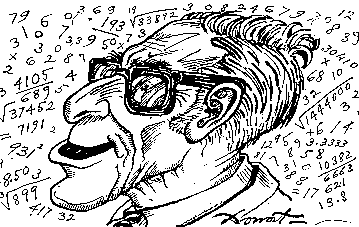
Wim Klein (GIF, 7 kB)

Wim Klein

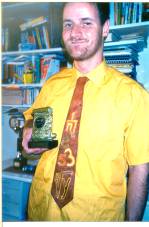
Gert Mittring (JPG, 9 kB)

Gert Mittring

13th root of a 100 digit number

The Rules

[Note: In future, no more records for single tasks will be considered. The record category will be replaced with new records for the fastest time to solve 9 tasks or 3 tasks (see below)]
  1. The record is a standard test of straightforward mental calculation for high order integer roots. The calculator should perform the calculation in his/her head without the aid of any other person and without using a calculating machines, computers, etc. nor may the calculator write down any intermediate results which are not part of the final result.
  2. The numbers of 100 digits whose 13th root is to be calculated should be randomly selected by computer immediately prior to the calculation.  It is important that the given numbers are the 13th power of integer numbers between 41246264 and 49238826, both inclusive. They should be displayed to the calculator on a computer screen, board, sheet of paper, screen or similar.
  3. The calculator has to write down the answers.
  4. The timing begins when the number becomes visible to the competitor and ends at the end of writing the answer.
  5. In some cases, the calculator may dictate the answers - then the timing ends as the calculator finishes dictating the last result.
  6. Two stop watches should be used: it would be appreciated these stopwatches record in minutes and seconds and tenths of a second rather than hundredths of an hour. At the end of the attempt the time should be taken as an average of the two watches.The name of the person making the attempt should be given, along with the date and place.
Willem Klein (Netherlands) improved his record for a single task five times - from 322 seconds in 1975 to finally 88.8 seconds in 1981. Later both Gert Mittring (Germany) and Alexis Lemaire (France) solved a single task in less than 15 seconds. Because the difficulty of the problem depends on the 100-digit number, no more records for solving a single task will be considered.

23rd root of a 200 digit number

(The 200 digit number should be a number raised to the 23rd power.)

 50   sec Shakuntala Devi (India)          1977      Dallas
In 2002, Gert Mittring calculated the 23rd root of a 200 digit number in 40.83 seconds. While the attempt was not officially verified, there is no doubt that he has done the calculation in this time.
No more records for this category will be considered.


Back to the World Record Homepage